






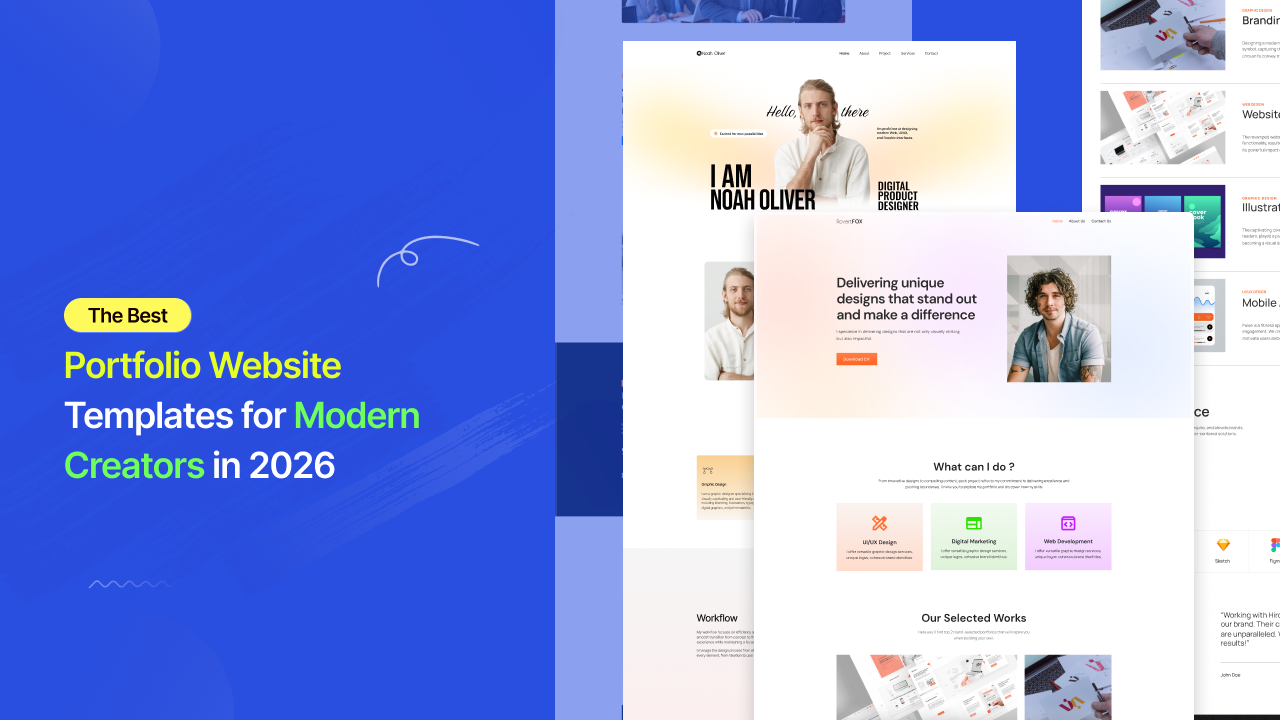

A portfolio website used to be simple.
You uploaded a few projects, added a short bio, linked your contact page, and hoped potential clients would understand your value from the work itself.
That approach no longer works.
In 2026, the internet moves too fast for unclear presentation. Clients scan before they read. Recruiters judge before they click. Creative agencies compare portfolios within seconds. And before someone decides whether your work deserves attention, they’ve already formed an opinion based entirely on your website experience.
That’s why modern Portfolio Website Templates have become far more important than most creators realize.
Not because templates save time.
Because they shape perception.
A clean portfolio instantly makes work feel more premium. A structured layout increases trust before a single project is opened. A smooth mobile experience creates professionalism without saying a word.
And in creative industries, perception often influences opportunity long before skill gets evaluated properly.
Why Most Portfolio Websites Still Feel Outdated

Many portfolio websites still look like digital archives instead of modern presentation systems.
Projects feel disconnected. Layouts feel crowded. Typography lacks hierarchy. Mobile responsiveness breaks. Navigation becomes confusing. The visitor has to work too hard to understand what the creator actually does.
That friction quietly kills opportunity.
The problem is not always the work itself.
The problem is presentation.
Modern audiences are visually trained now. They interact daily with polished SaaS products, premium startups, modern creator brands, and beautifully structured digital experiences. That means expectations have changed dramatically.
A portfolio website is no longer judged only against other portfolios.
It is judged against the modern internet itself.
And that changes everything.
Why Portfolio Website Templates Matter More in 2026

Creative competition online has exploded.
Designers, developers, photographers, video editors, marketers, artists, writers, creators, and agencies are all competing for attention across the same platforms.
At the same time, attention spans continue shrinking.
This creates a new reality where clarity matters more than complexity.
The strongest Portfolio Website Templates understand this shift perfectly. They are designed around focus, readability, structure, spacing, and flow instead of unnecessary visual clutter.
The visitor lands on the homepage and immediately understands:
who you are,
what you create,
and why your work matters.
That level of clarity is difficult to achieve manually without strong design experience.
Modern template systems solve this problem by already understanding visual hierarchy and user behavior before customization even begins.
Why Templates No Longer Feel Generic

There was a time when templates felt repetitive and low quality.
That perception is outdated.
Modern Portfolio Website Templates are built more like complete creative systems than static page designs. They account for typography rhythm, project spacing, responsiveness, section flow, animation balance, and conversion psychology.
This matters because creative work is emotional.
Clients rarely evaluate portfolios purely logically. They respond emotionally first. The presentation affects how valuable the work feels before they consciously analyze anything.
A minimalist portfolio with clean structure and intentional spacing immediately creates confidence.
The exact same projects placed inside a cluttered website can feel dramatically less professional.
That difference is not accidental.
Modern portfolio templates are designed around perception psychology as much as aesthetics.
Why Template-Kits.com Feels Different From Traditional Template Platforms

Among modern WordPress template platforms,Template-Kits.com takes a noticeably more structured approach.
Instead of overwhelming users with thousands of inconsistent layouts, the platform focuses on curated template kits powered by aBlocks.
The experience feels closer to a premium SaaS design ecosystem than a traditional WordPress marketplace.
This matters for creators because most freelancers and agencies don’t want to spend weeks building websites from scratch. They want a portfolio that already feels modern while still allowing complete creative control.
That’s exactly where aBlocks becomes important.
The system allows users to import complete website structures in one click and customize everything visually through Gutenberg without touching code.
For creators trying to build professional online presence quickly, this dramatically reduces the gap between creating work and presenting it professionally online.
The Shift Toward Conversion-Focused Portfolio Websites

Older portfolio websites were built mainly to showcase projects.
Modern portfolio websites are built to create opportunities.
That difference changes the entire structure.
A modern homepage doesn’t overload visitors with information. Instead, it creates direction. Typography feels intentional. Projects are easy to browse. Case studies feel structured. Contact actions appear naturally throughout the experience.
Even subtle design choices matter more now.
Whitespace affects perceived professionalism. Layout rhythm affects readability. Typography affects trust. Mobile responsiveness affects credibility.
The best Portfolio Website Templates already understand these patterns.
That’s why professionally structured template systems consistently outperform randomly designed portfolio sites built without strategic flow.
What Makes a Great Portfolio Website Template in 2026

The best portfolio websites all create momentum.
The visitor lands on the homepage and naturally moves through the experience without confusion.
The hero section establishes identity first. Featured work appears before attention drops. Testimonials or client logos reinforce credibility. About sections add personality without overwhelming the layout. Contact buttons remain visible without feeling aggressive.
Nothing feels accidental.
Everything exists to guide attention naturally.
This is one reason platforms like Template-Kits.com feel more modern than older WordPress ecosystems. Instead of prioritizing builder complexity, they focus on visual consistency, fast setup, and cleaner structure powered by aBlocks.
That approach aligns far better with how modern creators actually build brands online today.
Why Mobile Experience Matters More Than Ever

A huge percentage of portfolio traffic now comes from mobile devices.
Clients open links from Instagram bios. Recruiters browse portfolios from LinkedIn. Agencies review work while multitasking on smartphones.
And yet many portfolio websites still break completely on smaller screens.
Text becomes unreadable. Projects feel cramped. Images crop incorrectly. Navigation becomes frustrating.
A visitor rarely explains why they leave.
They simply lose confidence and move on.
Modern Portfolio Website Templates are now designed mobile-first because presentation quality directly affects credibility across every device.
The best templates maintain spacing, readability, image quality, and visual hierarchy without sacrificing performance.
That balance is difficult to build manually from scratch. Structured systems like aBlocks-powered template kits already solve much of that complexity automatically.
Why Simplicity Is Becoming the Biggest Competitive Advantage

Creative industries once rewarded complexity.
Modern digital experiences reward clarity.
The strongest portfolio websites in 2026 feel effortless. Clean navigation. Strong typography. Minimal distractions. Fast loading. Smooth browsing experience.
Visitors should never struggle to understand your value.
This is one reason lightweight Gutenberg-based systems are becoming more attractive than heavier page builders. Platforms like Template-Kits.com focus heavily on cleaner design systems, faster performance, and flexible visual structure through aBlocks.
And in industries where presentation shapes opportunity, that difference matters significantly.
Why More Creators Are Using Portfolio Website Templates Instead of Building From Scratch

For many freelancers and creators, custom-building portfolio websites no longer makes practical sense.
Not because custom design is bad, but because modern Portfolio Website Templates have dramatically closed the quality gap.
A professionally designed portfolio template now delivers:
|
Feature |
Modern Portfolio Templates |
|
Modern UI Structure |
✅ |
|
Mobile Responsive Layout |
✅ |
|
Faster Launch Speed |
✅ |
|
Professional Visual Hierarchy |
✅ |
|
Easy Customization |
✅ |
|
SEO-Friendly Structure |
✅ |
|
Gutenberg Compatibility |
✅ |
without requiring weeks of manual development work.
This is why modern creators increasingly prefer structured template systems over traditional portfolio builds.
The goal is no longer to design everything manually.
The goal is to present your work professionally as fast as possible.
Final Thoughts
A portfolio website is no longer just a place to upload projects.
It is your presentation system, your first impression, and often your most important digital asset.
Before clients contact you, they evaluate your presentation. Before recruiters read your experience, they judge your visual quality. Before opportunities happen, perception happens first. And that decision happens fast. Modern Portfolio Website Templates are built for that exact reality.Platforms like Template-Kits.com are helping modern creators launch clean, professional, conversion-focused portfolio websites faster through structured aBlocks-powered systems designed for clarity, performance, and modern digital presentation.
Frequently Asked Questions
Do I need coding knowledge to use Portfolio Website Templates?
No. Modern Portfolio Website Templates are designed for beginners and professionals alike. Platforms like aBlocks and Template-Kits.com allow users to customize layouts, images, typography, project sections, and branding visually without coding knowledge.
Can I customize the portfolio template for my own brand?
Yes. You can personalize typography, colors, layouts, animations, galleries, logos, and project structures to match your personal or agency identity.
Are Portfolio Website Templates mobile responsive?
Yes. Most modern portfolio templates are fully optimized for mobile, tablet, and desktop devices to ensure projects look professional everywhere.
Can portfolio templates work for agencies and freelancers?
Absolutely. Portfolio templates are widely used by freelancers, creative agencies, developers, photographers, marketers, UI/UX designers, writers, and digital studios.
Why are lightweight portfolio websites becoming more popular?
Lightweight websites improve loading speed, SEO performance, readability, and user experience. Modern Gutenberg-based systems like aBlocks focus on cleaner structure and faster performance compared to heavier builder ecosystems.