

Category: Guide Lines

  • Free Fitness Trainer Website Template to Build Training Site

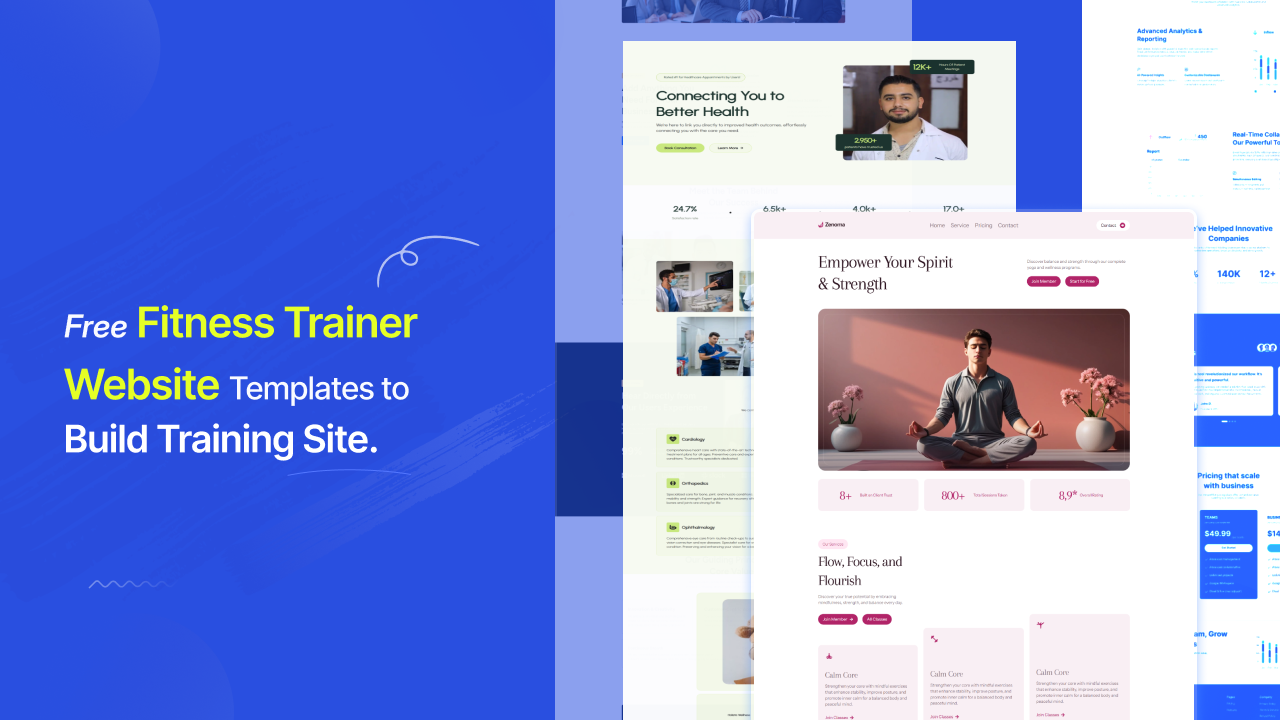
    Free Fitness Trainer Website Template to Build Training Site

    Your Clients Are Searching. Is Your Website Ready?

    You’ve got the physique, the certifications, and the track record to prove it. But when a potential client Googles “personal trainer near me” at 10pm on a Tuesday — the moment they’re most motivated and most likely to book — your website is either winning them over or sending them straight to your competitor.

    This isn’t a design problem. It’s a revenue problem.

    The personal fitness trainer industry is valued at $15.6 billion in 2026, growing toward $43.3 billion by 2036. The U.S. alone is home to 329,000 personal trainer businesses, and fitness trainer employment is projected to grow 14% from 2022 to 2032 — nearly double the average for all other occupations.

    The market is growing. The competition is growing faster. And the trainers winning online are not necessarily the most experienced ones in the room. They’re the ones with the sharpest, fastest, most client-focused website — built on a template that does the hard work of converting visitors before a single message is sent.

    This guide breaks down everything you need: what makes a great fitness trainer website template, the key sections that turn visitors into clients, how martial arts and gym templates differ, and where to find free premium designs that look like they cost thousands.

    [IMAGE PROMPT: High-energy hero section of a personal trainer website showing a trainer in action with a bold headline, dark background, and a strong “Book a Session” CTA button — desktop and mobile view side by side]

    What Is a Fitness Trainer Website Template?

    A fitness trainer website template is a professionally designed, pre-built website layout built specifically for personal trainers, gym owners, fitness coaches, and martial arts instructors.

    Think of it as a proven blueprint. The section structure, the CTA placement, the page flow — all of it has already been mapped to how fitness clients actually behave online. You’re not guessing where to put your transformation photos or how to structure your pricing page. The template already knows.

    A purpose-built fitness template includes pages for services and training programs, trainer credentials and story, client testimonials and before/after results, class schedules and booking integrations, membership or pricing tiers, and a contact or discovery call form. What separates a fitness template from a generic business template is its energy. Fitness clients are motivated buyers who respond to intensity, proof, and momentum. Every design element in a great fitness trainer website template is engineered to sustain that momentum from the first scroll to the booking button.

    Why Your Fitness Website Is Your Highest-Converting Sales Tool

    Most trainers treat their website as a digital business card. The best trainers treat it as a 24/7 sales machine.

    Here is what the numbers show about the fitness industry’s online landscape in 2026:

    Market Indicator

    Data

    Source

    Personal fitness trainer industry value (2026)

    $15.6 billion

    Future Market Insights

    U.S. personal trainer market size (2026)

    $11.9 billion

    IBISWorld

    Employment growth projection (2022 to 2032)

    14%

    WifiTalents

    Online fitness market projection by 2030

    $138.69 billion

    The Business Research Company

    Personal trainer businesses in the U.S.

    329,000

    IBISWorld

    Online personal training segment growth rate

    33.1%

    Wellness Creative Co.

    The shift to online and hybrid training has permanently changed how clients find and vet personal trainers. Before they ever step foot in your gym or open a Zoom session, they have already decided whether you’re credible. That decision is made on your website — usually within the first five seconds.

    A fitness trainer website template built for conversion closes that gap instantly.

    What Makes a Great Fitness Trainer Website Template

    Not every template that looks good in a screenshot will perform. Here is what separates the templates that win clients from the ones that just look nice in the demo.

    A Bold Hero Section That Sells the Transformation

    Your homepage hero is the most valuable real estate on your entire website. It needs to do three things before the visitor scrolls even once: communicate what you offer, show them who you are, and give them an immediate reason to take action.

    The best fitness trainer website templates place a full-bleed training photograph above the fold, pair it with benefit-led headline copy — not “Welcome to My Studio” but something like “Turn Your Body Into Your Strongest Version” — and position a single, unmissable CTA button that links directly to a booking or contact form.

    Client Results as Social Proof, Not Decoration

    Generic fitness sites hide testimonials at the bottom of the page. High-converting ones lead with them. The best fitness trainer website templates include testimonials or before/after transformation sections within the first two scrolls of the homepage. Visitors need to see proof before they feel comfortable enough to inquire.

    Class Schedules and Program Pages Built In

    A fitness website template should have more than a homepage. It needs dedicated program or service pages, a class schedule display, a pricing or membership section, and an about page built around your credentials and training philosophy. Templates that include all of these as pre-structured layouts cut your setup time dramatically.

    Mobile-First Design That Performs on Any Screen

    More than half of visitors to personal trainer websites use mobile over desktop. A template that looks sharp on a desktop but breaks on a phone is not a template — it’s a liability. Mobile responsiveness is non-negotiable, and the best templates are designed mobile-first, not adapted after the fact.

    Booking and Scheduling Integration

    The fastest path from website visitor to paying client runs through a frictionless booking flow. Your template should make it easy to embed Calendly, Acuity, or any scheduling tool directly into the page. Every extra click between “I’m interested” and “I’m booked” is a conversion you lose.

    Fitness Trainer Website

    Types of Fitness Trainer Website Templates

    Personal Trainer Website Templates

    Built for solo practitioners and independent coaches. These templates center personal branding — your face, your story, your method. They typically feature a strong personal photography section above the fold, a credentials and certifications block, one-on-one and small group program pages, and a client results gallery.

    The key visual language here is energy and authority. Visitors are choosing you as much as they are choosing a training program. Your template should make that personal connection instantly.

    Gym Website Templates

    Designed for multi-trainer studios, boutique gyms, and fitness centers. Gym templates need to handle more complexity: multiple instructors, multiple class types, location information, membership tiers, and in some cases an online store for gear or supplements.

    Strong gym website templates use bold typography and high-contrast photography to communicate intensity, while keeping navigation clean enough that a new visitor can find the class schedule or membership pricing in under ten seconds.

    Online Fitness Coach Templates

    The online coaching economy is exploding.The online fitness market is projected to grow at a rate of 33.1%, and templates designed for digital delivery reflect this with program sales pages, video course previews, email opt-in sections, and app or platform integration links. These templates tend to lean into lifestyle photography and outcome-focused copy more than facility shots.

    Martial Arts Website Templates

    Martial arts studios have their own distinct design language, and generic fitness templates rarely do them justice. A great martial arts website template communicates tradition, discipline, and community — while still converting visitors into students efficiently.

    Category

    Martial Arts Website Templates: A Category of Their Own

    The best martial arts websites in 2026 do more than look sharp — they convert leads, build trust, and reflect the unique culture of each school. Great martial arts websites combine high-impact visuals, conversion optimization, and mobile-first experiences, all tailored to bring in new students consistently.

    Whether you run a BJJ academy, a karate dojo, an MMA gym, or a traditional Taekwondo school, your template needs to account for a specific set of design principles that generic fitness layouts miss entirely.

    A standout martial arts website template includes:

    A full-screen hero with action photography that communicates the intensity and community of training. Age-based program segmentation — Kids, Teens, Adults, Competitors — so visitors can self-identify quickly. Prominent class schedule display so prospective students can see when and where to show up. Google Reviews or testimonials displayed natively, close to the top of the page. A free trial or intro class offer as the primary CTA, not a generic contact form.

    The design tone shifts depending on the discipline. A traditional karate or aikido dojo benefits from a restrained, Zen-inspired aesthetic — clean typography, muted tones, kanji or cultural imagery that communicates heritage. An MMA gym or BJJ academy earns its credibility from bold typography, dark color palettes, action shots, and the kind of raw intensity that makes someone think, “That’s where I want to train.”

    The best martial arts websites in 2026 have their websites positioned as the school’s number one marketing asset — increasingly the first impression in AI search results, Google AI Overviews, and discovery platforms your prospects already use. The right martial arts website template makes sure that impression is the right one.

    [IMAGE PROMPT: Three martial arts website homepage designs side by side — a traditional karate dojo with dark calm tones and Japanese design elements, an MMA gym with bold black and red action photography, and a kids martial arts school with a bright welcoming family-oriented layout]

    Free vs. Paid Fitness Trainer Website Templates: The Real Comparison

    Feature

    Generic Free

    Premium Paid

    Free Premium (aBlocks)

    Fitness-specific layouts

    Rarely

    Yes

    Yes

    Professional design quality

    Variable

    High

    High

    Mobile optimization

    Inconsistent

    Yes

    Yes

    No-code customization

    Sometimes

    Usually

    Yes

    Booking tool integration

    Rarely

    Usually

    Yes

    Class schedule section

    No

    Sometimes

    Yes

    Regular design updates

    No

    $Sometimes

    Yes

    Cost

    $0

    $30 to $300+

    $0

    The assumption that free templates look cheap is outdated. The right platform gives you professional-grade fitness and martial arts templates with full customization capability at zero cost.

    The Best Free Fitness Trainer Website Templates in 2026: Template-Kits.com

    Free Templates

    If you have been sorting through Squarespace themes, Wix layouts, and ThemeForest listings trying to find a design that actually looks like it was made for a serious fitness professional — stop.

    template-kits is a library of free, professionally designed website templates built on aBlocks, a WordPress Gutenberg-based page builder. Every template is designed by professional designers and available at no cost. Not a trial version. Not a stripped-down free tier. Completely free.

    For fitness trainers, this matters in a very specific way.

    Designed for Performance, Not Just Aesthetics

    Every template in the library reflects the visual language of high-converting fitness websites: bold photography sections, program cards with clear CTAs, testimonial blocks, and mobile-first layouts. These are not generic marketing templates repurposed for fitness. They are built with the fitness client journey in mind.

    One-Click Import Through aBlocks

    The aBlocks WordPress plugin transforms the Gutenberg editor into a full visual page builder. You browse the template library at template-kits Feetness and gym template, import your chosen layout with a single click, and then customize every block — colors, fonts, images, section order, copy — without touching a line of code.

    For a personal trainer building their first professional site, or a gym owner upgrading from a dated template, this workflow removes every technical barrier between having an idea and having a live website.

    Users who have built with aBlocks describe the experience this way:

    “aBlocks has completely changed how I see Gutenberg. The customization options are incredibly intuitive, and everything feels polished and professional. It’s like Gutenberg finally found its missing piece.” (Source: template-kits.com user testimonials)

    Works on Any WordPress Setup

    No theme lock-in. No proprietary ecosystem. aBlocks works with classic and block-based WordPress themes alike, which means you retain full ownership and flexibility over your site as it grows.

    New Templates Added Continuously

    The library expands regularly across fitness, wellness, martial arts, consulting, and more — with every new addition built to the same professional design standard as the rest.

    [IMAGE PROMPT: Screenshot of the template-kits.com library grid showing fitness and wellness template previews with clean card layout, template names, and preview buttons visible on a light background]

    How to Choose the Right Fitness Trainer Website Template

    Follow this framework before you commit to a layout.

    First, define your primary goal. Is it booking one-on-one sessions, selling an online coaching program, growing gym memberships, or enrolling new martial arts students? Your goal determines which template structure serves you best.

    Second, match the template tone to your brand energy. A high-intensity bootcamp coach and a mindfulness-based wellness trainer both need fitness templates — but they need very different ones. Bold and dark versus soft and inviting. Action photography versus lifestyle photography. Be honest about what your brand actually communicates and find a template that matches it.

    Third, check the mobile experience before anything else. Open the demo on your phone. Navigate to the class schedule. Find the contact button. If it takes more than three taps to get to the booking form, look for a different template.

    Fourth, look for booking-ready layouts. A template with a dedicated booking section or an embedded CTA tied to a scheduling tool will save you hours of customization work.

    Fifth, think about scalability. Can you add new program pages, a blog, or a merchandise section without rebuilding the site? Templates built on modular block systems — like those available through template-kits.com via aBlocks — give you that flexibility from day one.

    What the Best Fitness Trainer Websites Have in Common in 2026

    Looking across the personal trainer websites that consistently rank, attract leads, and convert clients, a few patterns repeat without fail.

    They put a real person front and center. Stock photography of gym equipment does not convert. A great trainer photo — ideally in action, not posing — placed prominently above the fold immediately creates personal connection.

    They lead with outcomes, not credentials. Credentials matter, but they belong below the fold. The hero section of a high-converting fitness site speaks directly to the result the client wants: “Lose the first 20 pounds in 90 days” lands better than “NASM-Certified Personal Trainer.”

    They make the booking step obvious and easy. The best fitness trainer websites have a clear, repeated CTA — “Book a Free Consultation,” “Claim Your First Session,” “Start Today” — positioned after the hero, after the services section, and in the footer. Visitors always know what to do next.

    They display social proof where it counts. Client transformation stories, before/after photos with permission, and video testimonials are placed near the top of the homepage — not buried in a testimonials tab. Proof converts faster than any headline.

    Frequently Asked Questions

    Is there a free fitness trainer website template I can download?

    Yes. template-kits.com offers a library of free professional fitness templates powered by aBlocks for WordPress. Other platforms like Colorlib and ThemeWagon also offer free HTML fitness templates, though customization options are more limited without a no-code builder.

    What should a personal trainer website include?

    A personal trainer website needs a strong hero section with a clear value proposition and CTA, an about page that builds personal credibility, a services or programs page with pricing or inquiry options, a client testimonials or results section, and a booking or contact form. For online trainers, add a program sales page and an email opt-in.

    What is the best website builder for a personal trainer?

    WordPress with aBlocks via template-kits.com gives you full ownership, professional templates at no cost, and complete no-code customization freedom. Squarespace and Wix are user-friendly alternatives, though ongoing platform fees apply and template depth is more limited for fitness-specific layouts.

    Are there free martial arts website templates?

    Yes. Free martial arts website templates are available through Colorlib, uiCookies (HTML templates), and template-kits.com for WordPress via aBlocks. For paid premium options with more discipline-specific features, ThemeForest and TemplateMonster carry a wide range of karate, BJJ, MMA, and general dojo themes.

    What makes a martial arts website template different from a regular fitness template?

    Martial arts templates are built around discipline-specific content: class schedule displays for belt ranks and age groups, program segmentation by age or experience level, an intro class or free trial CTA, and a design tone that matches the school’s philosophy. A BJJ academy and a children’s karate studio both need martial arts templates — but they need very different visual identities.

    Can I use a fitness trainer website template if I only do online coaching?

    Absolutely. Online coaching has its own template category optimized for digital delivery: program sales pages, video preview sections, email list building, and course or membership platform integrations.template-kits.com includes templates built for digital-first fitness businesses alongside traditional gym and in-person training layouts.

    Build the Website Your Training Business Deserves

    The fitness industry is one of the most competitive markets online. A generic template, a slow-loading homepage, or a design that communicates doubt instead of authority loses clients before your first session ever happens.

    The good news is that the gap between a forgettable fitness website and a client-converting one is not a budget gap. It is a template gap.

    template-kits.com is where that gap closes. Free, professionally designed fitness trainer website templates powered by aBlocks — built by designers who understand what energy, credibility, and conversion look like in this industry. Import in one click. Customize everything. Publish without writing code.

    Your next client is already searching. Give them a reason to stop scrolling.Browse free fitness and martial arts website templates at template-kits.com and launch the professional fitness site your training business has always deserved.
  • Free Coaching Website Templates & Lunching Guide for Coaching Business

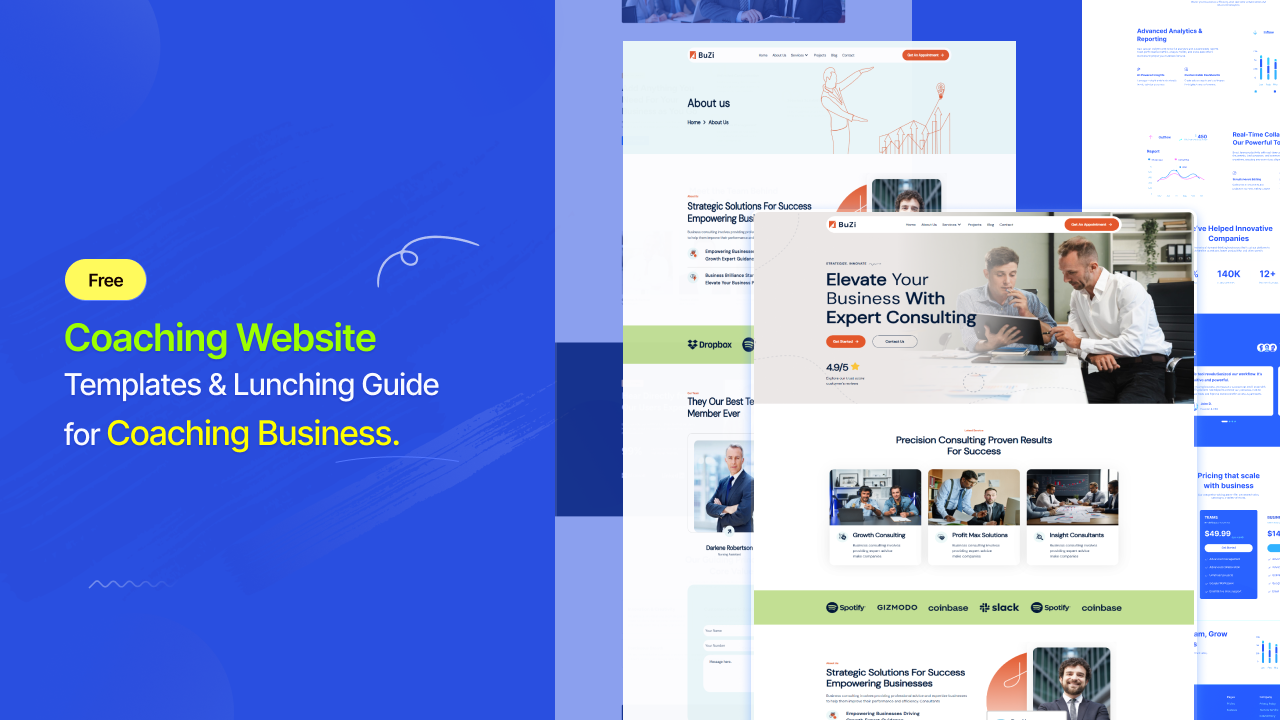
    Free Coaching Website Templates & Lunching Guide for Coaching Business

    Your Coaching Skills Deserve a Website That Matches

    You’ve put in the hours. You’ve earned the credentials. You know how to change someone’s life inside a 60-minute session.

    But your website? It looks like it was built in a hurry on a Sunday afternoon — and your potential clients can tell.

    Here’s the uncomfortable truth: your website is your first coaching session with every new visitor. Before they read a single word of your bio, they’ve already decided whether you’re worth trusting. That judgment happens in 50 milliseconds — roughly the time it takes to blink.

    The coaching industry hit $5.34 billion in global revenuein 2025 and is projected to reach $5.8 billion in 2026

    (Source: ICF Global Coaching Study, via luisazhou.com)

    Competition is fierce. But here’s the good news: the right coaching website template closes the credibility gap instantly — and you don’t need to hire a designer or write a single line of code to get it done.

    Let’s break it all down.

    📌 Key Stat: 85% of coaching clients report a boost in self-confidence after working with a coach — but first, they have to find you, trust your site, and book a session. (Source: ICF Global Coaching Study, via entrepreneurshq.com)

    What Is a Coaching Website Template?

    A coaching website template is a pre-designed, professionally structured website layout built specifically for coaches — life coaches, business coaches, executive coaches, fitness coaches, career coaches, and more.

    Think of it as a blueprint your client handed you before a session began. The structure is already set. The flow is already tested. All you do is fill it with your story, your services, and your personality.

    A great coaching template handles:

    • A compelling homepage hero with a clear offer
    • About page that builds personal connection
    • Services or programs page with pricing or inquiry CTAs
    • Testimonials section for social proof
    • Blog or resources for SEO and thought leadership
    • Contact or booking page with scheduling integration

    What separates a coaching template from a generic website template is intent. Coaching templates are built around personal trust. The visitor isn’t buying a product — they’re choosing a person to help them change. Every design decision serves that emotional journey.

    Coaching templates

    Why Your Coaching Website Is a Business Decision, Not Just a Design Choice

    Coaches who downplay their website tend to say the same thing: “My clients come through referrals.”

    That works — until it doesn’t.

    Here’s what the data says:

    Stat

    Source

    Visitors form a site opinion in 50ms

    CXL, Missouri University of Science & Technology

    94% of first impressions are design-related

    CXL

    75% of users judge credibility by website design

    Stanford Web Credibility Research

    88% of users won’t return after a bad experience

    Turbopress.pro

    70% of individuals report improved performance after coaching

    ICF

    85% of coachees report increased self-confidence

    ICF

    The moment a potential client Googles “life coach near me” or “business coach for entrepreneurs,” they’re not just evaluating you — they’re evaluating your site. If it doesn’t communicate warmth, expertise, and professionalism within the first scroll, they’re gone. Off to your competitor who just happened to choose a better template.

    Your website isn’t a vanity project. It’s your highest-leverage marketing asset.

    Types of Coaching Website Templates You Should Know

    Not all coaching websites look the same — nor should they. Here’s a breakdown of the main types you’ll encounter:

    🌿 Life Coaching Website Templates

    The most popular category. Life coach templates lean into warmth, personal story, and transformation. Expect:

    • Soft color palettes (earth tones, pastels, warm whites)
    • Large personal photography above the fold
    • Testimonial-heavy layouts
    • “Book a Free Discovery Call” as the primary CTA

    Best for: Personal development coaches, mindset coaches, relationship coaches, women’s coaches.

    💼 Business Coaching Website Templates

    These carry a more structured, corporate-adjacent energy — without going cold. Business coaching templates highlight ROI, frameworks, and results.

    • Bold typography and high-contrast layouts
    • Case study or client result sections
    • Speaking, consulting, and program tier pages
    • Professional headshot above fold with authority-driven copy

    Best for: Executive coaches, entrepreneurship coaches, leadership coaches, startup advisors.

    🧠 Career Coaching Website Templates

    Clarity is the brand of career coaching — your template should reflect it. These designs are typically clean and structured with strong navigation.

    • Resume and skill-building service pages
    • Before/after client transformation stories
    • LinkedIn integration and credentialing sections
    • Workshop or group program pages

    Best for: Career transition coaches, job search coaches, HR consultants.

    🏋️ Health & Wellness Coaching Website Templates

    Energy, movement, and vitality — that’s the visual language here. Expect:

    • Bold photography or video backgrounds
    • Nutrition or fitness program breakdowns
    • Habit tracking or app integrations
    • Community or membership section

    Best for: Fitness coaches, nutritionists, health coaches, wellness practitioners.

    Coaching Website

    What Every Great Coaching Website Template Must Include

    Whether you’re building a life coach website or a consulting site, these are the non-negotiables:

    1. A Personal Hero Section That Leads With Transformation

    Your headline shouldn’t start with “Welcome to my website.” It should speak directly to where your client is right now and where you’re taking them.

    Example: “You don’t need more motivation. You need a strategy.”

    Templates that leave room for this kind of bold, personal messaging outperform generic ones every time.

    2. A Clear and Singular Call-to-Action

    What do you want the visitor to do? Book a discovery call. Sign up for a workshop. Download a guide. Pick one and design around it. The best coaching templates make the CTA unmissable — placed strategically in the hero, after the about section, and at the bottom of every page.

    3. Social Proof That Tells a Story

    Client logos are for B2B companies. Coaches need human testimonials — the kind that describe a life before and after coaching. Your template should have a testimonials section built in, ideally near the top of the homepage, not buried at the bottom.

    4. An About Page Built for Connection

    Clients choose coaches they trust. They want to know your story, your philosophy, and why you care. A great coaching template gives the About page room to breathe — not just a two-line bio and a headshot.

    5. Mobile-First Responsiveness

    Over 60% of global web traffic now comes from mobile devices. (Source: Loopex Digital, 2026) Your coaching template must look and function flawlessly on a phone screen. Pinch-zoom is a client lost.

    6. SEO-Friendly Page Structure

    Every coaching template should come with proper heading hierarchy (H1, H2, H3), fast loading speed, and clean code. These aren’t bonus features — they’re baseline requirements for ranking on Google.

    Coaching Website Templates: Free vs. Paid — What’s the Smarter Move?

    This is where most coaches get stuck. Let’s make it simple.

    Feature

    Generic Free Templates

    Premium Paid Templates

    Free Premium (aBlocks)

    Coaching-specific layouts

    Rarely

    Usually

    Yes

    Professional design quality

    Variable

    High

    High

    Full customization

    Limited

    Yes

    Yes

    No-code editing

    Sometimes

    Usually

    Yes

    Mobile optimization

    Inconsistent

    Yes

    Yes

    Ongoing updates

    Rarely

    Often

    Yes

    Cost

    $0

    $30–$300+

    $0

    Here’s the thing people don’t tell you: “free” doesn’t have to mean a compromised design. The right platform gives you premium-quality coaching templates at zero cost — and lets you customize everything without touching a line of code.

    That’s exactly what template kits delivers.

    The Best Free Coaching Website Templates in 2026: Template-Kits.com

    Template-Kits

    If you’ve been scrolling Squarespace, Wix, or ThemeForest wondering why you have to pay $80 for a template that still needs hours of tweaking — stop.

    Template-kits.com is a library of professionally designed, fully customizable website templates built on aBlocks — a WordPress Gutenberg-based page builder. And every single template is completely free.

    Not a trial. Not “free with limitations.” Completely free.

    Here’s why it matters for coaches specifically:

    🎨 Designed by Real Designers, Not Algorithms

    Every template in the library is built by professional designers who understand how visual hierarchy, color psychology, and layout flow affect trust. These aren’t cookie-cutter grids with placeholder text. They’re polished, considered, and conversion-aware.

    As one real user put it:

    “aBlocks has completely changed how I see Gutenberg. The customization options are incredibly intuitive, and everything feels polished and professional. It’s like Gutenberg finally found its missing piece.” (Source: template-kits.com user testimonials)

    ⚡ One-Click Import. Total Creative Control.

    The workflow is clean and fast:

    1. Visit template-kits.com and browse the library
    2. Install and activate the free aBlocks WordPress plugin
    3. Import your chosen template in a single click
    4. Customize every block — colors, fonts, images, text, layout — without code
    5. Hit publish

    From browsing to live site: hours, not weeks.

    🔧 Works With Any WordPress Theme

    Whether you’re on a classic theme or a modern block theme, aBlocks templates integrate cleanly. No theme lock-in. No proprietary ecosystem to escape later.

    🔄 New Templates Added Regularly

    The library grows continuously. Coaching, consulting, education, wellness, business — fresh designs across every niche, built to reflect modern design standards.

    library

    How to Create a Coaching Website: Step-by-Step

    If you’re starting from scratch, here’s the fastest, smartest path from zero to published:

    Step 1: Define your niche and ideal client. Life coach for burnt-out executives? Career coach for recent graduates? The sharper your focus, the better your copy — and the better your template choice.

    Step 2: Choose your platform. For no-code, flexible, SEO-friendly coaching sites — WordPress + aBlocks via template-kits.com is hard to beat. It’s free, fast, and fully owned by you (no monthly platform fees beyond hosting).

    Step 3: Import and customize a coaching template. Pick a layout that fits your brand’s energy. Swap colors and fonts to match your visual identity. Replace placeholder images with real photos of yourself — clients want to see the human behind the coaching.

    Step 4: Write copy that speaks to transformation. Don’t describe what you do. Describe what changes for your client. “I help ambitious women reclaim their confidence” converts better than “I offer life coaching services.”

    Step 5: Set up your booking flow. Use scheduling tools like Calendly, Acuity, or TidyCal. Embed them directly into your template’s CTA buttons. Friction kills conversions — make booking effortless.

    Step 6: Add social proof early. Even two or three strong testimonials — positioned above the fold or immediately after your hero section — significantly improve trust and conversion.

    Step 7: Optimize and publish. Check mobile view, confirm page speed, write your meta title and description, and hit publish.

    💡 Pro Tip: Add your own face to the hero section above the fold. Coaching sites with personal photography in the hero section consistently outperform those with stock images. Authenticity is your most powerful design element.

    Coaching Website Design: What the Best Ones Have in Common

    Looking at the highest-performing coaching websites in 2026, a few patterns show up repeatedly:

    • The message is personal, not corporate. The best coaches write to one ideal client, not everyone.
    • Social proof appears early. Client wins, testimonials, and press features are placed in the hero section or right below it — not buried in a tab called “reviews.”
    • The CTA is singular and repeated. “Book a free discovery call” appears after the hero, after the about section, and in the footer. Visitors always know what to do next.
    • The design reflects the coach’s energy. High-energy fitness coach? Bold palette, strong photography. Mindfulness coach? Soft tones, generous whitespace. Your template should match your vibe — not fight it.
    • The About page is the real homepage. For coaches, the About page is often the highest-traffic page. Your template should make it easy to tell a compelling personal story there.

    The Bottom Line: Your Template Is Your First Impression

    In a coaching industry that’s growing at a near-double-digit annual rate and projected to reach $9.5 billion by 2032, the coaches who win clients online aren’t necessarily the most experienced or the most credentialed. They’re the ones who communicate trust, warmth, and expertise within the first few seconds of a website visit.

    Your template determines whether that first impression works for you or against you.

    You don’t need to spend thousands on a web designer. You don’t need to spend weeks learning code. You need a professionally designed, purpose-built coaching template — and you need to make it yours.

    Template kits is where coaches go when they want premium design without the premium price tag. Free templates. Built by designers. Powered by aBlocks. Fully customizable on WordPress.

    🚀 Ready to Launch Your Coaching Website?

    Browse free professional coaching website templates at template-kits.com — import with one click, customize everything, and publish the site your coaching business deserves.

    Your next client is already searching. Make sure they find something worth staying for.

    Coaching Website Templates: Frequently Asked Questions

    How do I create a coaching website?

    Start with a purpose-built coaching template rather than a blank canvas. Install WordPress, activate the free aBlocks plugin, import a template from template-kits.com, then customize copy, colors, and images to match your brand. Add a booking tool and publish. Most coaches can launch in a weekend.

    Are there free coaching website templates I can download?

    Yes.Template-kits.com offers professionally designed, fully free templates powered by the aBlocks WordPress builder. Other sources like Colorlib, Wix, and Webflow offer limited free options, but the design quality varies significantly.

    What’s the best life coach website template?

    The best life coach template for you depends on your niche and visual identity. Look for a layout that centers personal photography, includes a prominent testimonials section, and has a clear discovery call CTA. Templates available at template-kits.com are built to these standards and are fully free.

    Can I get coaching website templates in Word format?

    Coaching website templates in Word format (DOCX) are typically used for coaching program worksheets or session outlines — not web design. For a live coaching website, you need a web-based template through platforms like WordPress, Wix, or Squarespace. For document-style coaching templates, platforms like Canva or Etsy offer downloadable options.

    What should a business coaching website include?

    A strong business coaching website needs: a clear value proposition for your ideal client, authority signals (credentials, press, client logos), a case study or result-focused testimonials section, service and pricing tiers, and a streamlined path to a discovery call or consultation booking.

    What are the 5 C’s of coaching?

    The 5 C’s of coaching are typically defined as: Clarity (understanding the goal), Commitment (dedication to the process), Confidence (belief in the outcome), Communication (honest dialogue), and Consistency (sustained effort). (I must fact-check — variations exist across coaching frameworks and organizations)

    What is the 70/30 rule in coaching?

    The 70/30 rule in coaching suggests that the client should do 70% of the talking in a session, while the coach speaks 30% of the time. The emphasis is on asking powerful questions that guide the client to their own insights rather than advising. (I must fact-check — this is a widely referenced concept but sourcing varies)

    What are the 7 pillars of coaching?

    The 7 pillars of coaching vary by framework but commonly include: Presence, Listening, Questioning, Feedback, Goal-Setting, Accountability, and Trust. Different coaching bodies (ICF, EMCC, etc.) define their competency models differently. (I must fact-check against the latest ICF Core Competencies model)

  • Best B2B Website Templates That Convert Visitors into Customers (2026)

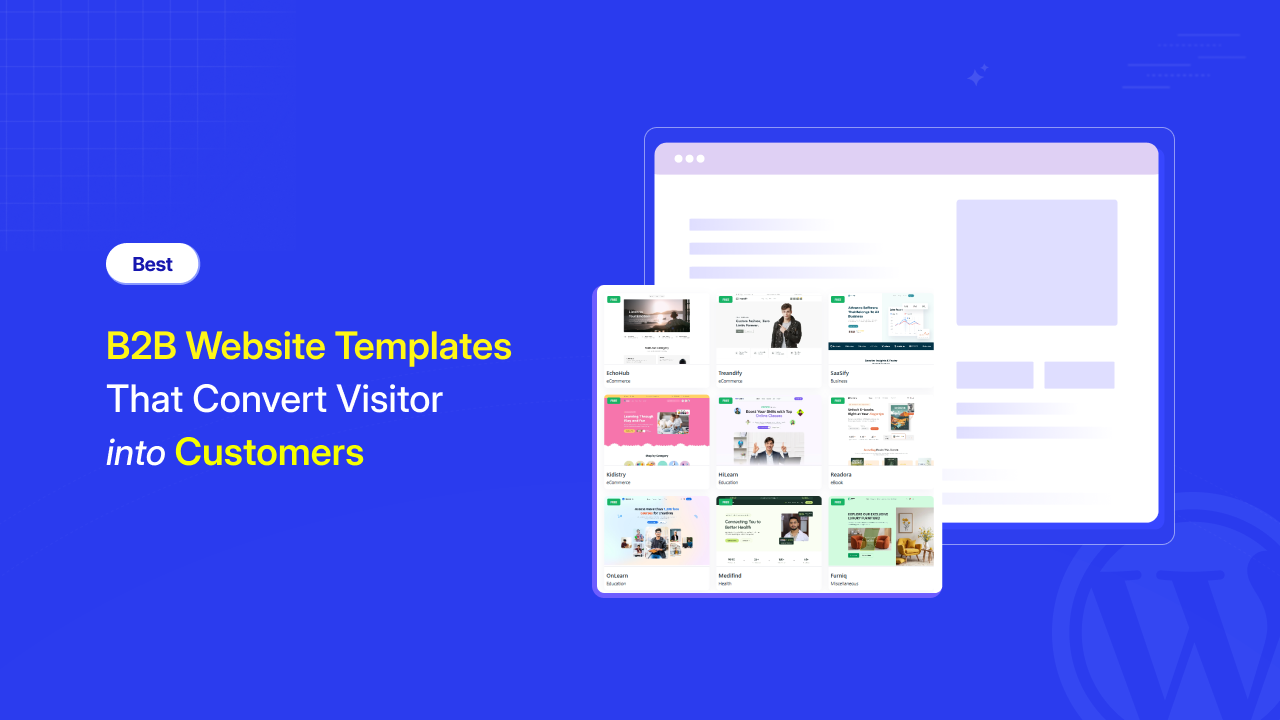
    Best B2B Website Templates That Convert Visitors into Customers (2026)

    You’ve got a great product. You’ve got the pitch. You even know your target clients by name.

    But your website? It’s quietly killing deals before your sales team ever gets the call.

    Here’s the cold truth: most B2B buyers do 70–80% of their decision-making before they even land on your website. And when they do arrive — usually after reading three comparison posts and skimming a Reddit thread — they want clarity, credibility, and a reason to stay.

    If your homepage opens with “We are a customer-focused solutions provider,” you’ve already lost them.

    This is exactly why choosing the right B2B website template matters more than most founders realize. The right template isn’t just a pretty layout — it’s the architecture of your first impression, your sales pitch, and your trust signal, all in one screen.

    In this guide, you’ll find everything: what makes a great B2B website template, how to choose one, where to get them for free, and which platform delivers professional-grade designs without a single line of code.

    📌 Key Takeaway: 94% of first impressions are design-related, and you have just 50 milliseconds for a visitor to form an opinion after landing on your site. Your template sets that tone instantly.

    What Is a B2B Website Template?

    A B2B (business-to-business) website template is a pre-built, professionally designed website layout crafted specifically for companies that sell products or services to other businesses — not direct consumers.

    Think IT consulting firms, manufacturing suppliers, SaaS companies, wholesale distributors, logistics providers, business consulting agencies. The audience is sophisticated. The decision-making is committee-driven. And the stakes per deal are high.

    A B2B website template gives you:

    • Pre-structured page layouts (homepage, services, about, contact)
    • Navigation designed for business decision-makers
    • Section blocks for case studies, testimonials, and team credentials
    • CTAs oriented around demos, consultations, and quotes (not impulse purchases)

    The difference between a B2B template and a generic business template is subtle but significant. B2B layouts prioritize trust signals and value clarity over aesthetic flair. Every section earns its place by moving a potential client one step closer to picking up the phone.

    Website Template

    Why Your B2B Website Design Is a Revenue Decision

    Before we get into templates, let’s get one thing straight: a B2B website isn’t a branding exercise. It’s a revenue asset.

    More than three-fourths of B2B eCommerce buyers consider site design the number one factor in deciding to make a purchase. Meanwhile, 48% of people say website design is the number one factor they use to determine a business’s credibility.

    Here’s what the data says about the gap between average and excellent:

    Metric

    Average B2B Site

    Top Performing B2B Site

    Visitor-to-lead conversion rate

    1.5%

    8–15%

    First impression formation

    50 milliseconds

    50 milliseconds

    Users who won’t return after bad UX

    88%

    88%

    Buyers who rely on websites early in purchase journey

    70% to 80%

    80% to 90%

    Site design’s influence on first impression

    ~94%

    94%

    The average B2B website turns just 1.5% of visitors into leads. Top performers reach 8 to 15%. That gap is not a small tweak — it is a business-changing difference.

    The right template gets you into that top performer bracket from day one.

    What Every Great B2B Website Template Must Have

    Not all templates are created equal. Here’s what separates a template that looks good from one that actually works:

    1. A Crystal-Clear Value Proposition Above the Fold

    The best B2B websites lead with clarity over cleverness. They state what they offer, who it’s for, and why it matters — without burying the message in jargon or vague taglines.

    Your hero section should answer three questions in under five seconds:

    • What do you do?
    • Who do you do it for?
    • Why should they care?

    2. Trust Signals Baked Into the Layout

    75% of visitors see well-designed websites as more trustworthy, directly influencing their decision to engage with your brand.

    Your template should have dedicated sections for:

    • Client logos (right below the hero — don’t bury them)
    • Testimonials and case study previews
    • Certifications, awards, or industry affiliations
    • Real numbers and results

    3. Conversion-Focused CTAs at Every Stage

    Don’t make visitors hunt for the next step. A great B2B template places strategic CTAs — “Request a Demo,” “Get a Quote,” “Schedule a Call” — at key scroll points. Not just at the top and bottom.

    4. Mobile-First, Always

    77% of searches come from mobile, and 84% of users will form a negative impression if the mobile experience disappoints. Your template must be fully responsive by default.

    5. Modular Section Blocks

    The best templates are built in reusable blocks — hero, features, testimonials, CTA, FAQ, footer. This means you can rearrange, add, or remove sections without touching a line of code. Especially important if you’re using a block-based website builder.

    6. Clean Navigation That Mirrors the Buyer Journey

    B2B buyers are time-poor. Your navigation should reflect the journeys your visitors actually take, not your internal org chart. Organize by industry, use case, or buyer type — not by your department structure.

    Types of B2B Website Templates You Need to Know

    🔵 Business Consulting Website Templates

    Designed for strategy firms, management consultants, and advisory services. These templates feature strong typography, case study sections, team credential bios, and refined color palettes (often dark navy, forest green, or slate grey) that communicate authority.

    What to look for: Prominent “Book a Consultation” CTAs, service page templates, blog/insights section.

    🟢 IT Consulting Website Templates

    Technical buyers are skeptical by nature. IT consulting templates lean on structure and substance: service breakdowns, technology stack icons, security badges, and ROI-focused messaging. Clean, often minimalist designs with structured grids work best here.

    What to look for: Technology logos section, problem-solution layout, detailed service pages, and integration showcases.

    🟡 Technology Consulting Website Templates

    For digital transformation firms, cloud service providers, and tech-forward agencies. These templates tend to use bolder design systems — gradients, dark mode options, subtle animations — while maintaining the professional credibility B2B buyers demand.

    What to look for: Product demo previews, client ROI stats, interactive UI elements.

    🔴 Distributor Website Templates

    Built for wholesale suppliers, industrial distributors, and B2B product companies. These templates often mirror B2B eCommerce patterns: product catalogs, bulk ordering prompts, industry/vertical navigation, and account-based login flows.

    What to look for: Category-based navigation, product grid sections, RFQ (request for quote) forms.

    ⚫ SaaS / Software B2B Website Templates

    The most competitive category. SaaS templates are purpose-built for the subscription economy: free trial CTAs, feature comparison tables, pricing page sections, integration badges, and onboarding flow previews.

    What to look for: Pricing page template, feature grid, product screenshot sections, G2/Capterra review badges.

    B2B Website Templates: Free vs. Paid — What’s Actually Worth It?

    Let’s settle this debate.

    Features

    Free Templates

    Premium Paid Templates

    Free Premium (aBlocks)

    Design Quality

    Variable

    High

    High

    Customization

    Limited

    Full

    Full

    Support

    Community

    Priority

    Active community

    Page Speed

    Variable

    Optimized

    Optimized

    No-Code Editing

    Sometimes

    Usually

    Yes

    Cost

    $0

    $20–$200+

    $0

    Regular Updates

    Rarely

    Often

    Yes

    Here’s the thing most people get wrong: “free” doesn’t have to mean “basic.”

    The Best Place for Free B2B Website Templates in 2026: Template-Kits.com

    B2B Website Templates

    Let’s talk about the smartest move you can make right now.

    Template-Kits.com is a library of premium, professionally designed website templates — built on aBlocks, a WordPress block-based website builder. And they’re completely free.

    Not “free with limits.” Not “free trial.” Fully free.

    Here’s what makes this genuinely impressive:

    🏆 Designed by Professional Designers, Not Algorithms

    Every template in the library is crafted by professional designers — the kind of people who know why whitespace matters, how color contrast drives trust, and where to place a CTA so it actually gets clicked. These aren’t cookie-cutter layouts. They’re polished, considered, and built to compete.

    ⚡ Powered by aBlocks — The WordPress Builder That Changes Everything

    aBlocks is a WordPress Gutenberg plugin that brings drag-and-drop simplicity to WordPress without the bloat of older builders. Real users describe it this way:

    “aBlocks has completely changed how I see Gutenberg. The customization options are incredibly intuitive, and everything feels polished and professional. It’s like Gutenberg finally found its missing piece.”

    “There is no way I have interest to build a website by using Gutenberg, until aBlocks comes with all new intuitive features. The right sidebar is mindblowing.”

    (Source: template-kits.com user testimonials)

    🎯 One-Click Import. Full Customization After

    The workflow is clean:

    1. Browse templates at template-kits.com
    2. Import in one click via aBlocks
    3. Customize every block — colors, fonts, images, layout — without touching code
    4. Publish

    No developer required. No waiting on a design agency. No four-figure invoices.

    📐 Works With Any WordPress Theme

    Whether you’re using a classic theme or a modern block theme, aBlocks templates integrate cleanly. You’re not locked into a proprietary ecosystem.

    🔄 New Templates Added Continuously

    The library grows regularly with fresh designs across industries — including business consulting, technology, IT services, corporate, and more.

    B2B Website Design Trends You Need in Your Template (2026)

    Choosing a template isn’t just about looks. It’s about making sure your site speaks the language of 2026 buyers.

    1. Conversion-First Architecture

    In 2026, the design conversation isn’t about bounce rate or time-on-site — it’s about whether your website is contributing to revenue. Look for templates built around actions, not aesthetics.

    2. Modular, Component-Based Design

    Design ops and content ops are merging, and modular design is the common language. Templates built in interchangeable blocks let you update your site without a designer on call.

    3. Social Proof Positioned Early

    Top-performing B2B websites don’t save client logos and testimonials for the bottom of the page. They embed them in the hero section. Your template should make this easy.

    4. Clear Dual Audience Navigation

    If your B2B product serves different buyer types (e.g., executives vs. IT teams), your template should allow segment-based navigation. The best B2B homepages have distinct sections easily accessible through intuitive navigation, with each area visually differentiated through strategic colour application.

    5. Speed-Optimized Structure

    A 1-second improvement in page load time can increase B2B conversions by 7%. Lightweight templates built on clean code outperform heavy, plugin-bloated alternatives over and over.

    How to Choose the Right B2B Website Template for Your Business

    Here’s a practical framework:

    Step 1: Define your primary visitor action. Is it “book a demo,” “request a quote,” or “download a guide”? Every template decision should serve this action.

    Step 2: Map your buyer personas. Are you targeting C-suite executives, procurement managers, or technical leads? Each persona responds to different design signals. Executive buyers want credibility. Technical buyers want detail. Procurement managers want clarity.

    Step 3: List your must-have sections. For most B2B businesses, this includes: hero, about, services/features, social proof (client logos + testimonials), a lead magnet section (case study, demo, consultation), and contact.

    Step 4: Filter for mobile and speed. Preview any template on mobile before committing. Test it with Google PageSpeed Insights if possible.

    Step 5: Check customization depth. Can you change the layout structure, not just the colors? The best templates — especially those built on aBlocks — give you full control at the block level.

    B2B Website Design Examples: What the Best Ones Have in Common

    Looking at the top-performing B2B websites in 2026 — from HubSpot to Notion to Slack to Zendesk — a few patterns emerge consistently:

    The best B2B websites showcase clear messaging, trust-building signals, and design focused on converting visitors. Specifically:

    • HubSpot: Strong free tool offering that drives leads while demonstrating the product. Clear “Get a Demo” CTAs paired with an educational content library.
    • Notion: Minimalist design where every unnecessary element is stripped away. Product shots and custom illustrations do the talking.
    • Slack: Bold, focused messaging with benefit-first copy. Conversion path is obvious within three seconds.
    • Zendesk: Complex solutions made accessible through clear visual hierarchy and audience-segmented navigation.

    The template you choose should make these patterns easy to replicate — not require you to rebuild from scratch.

    The Bottom Line: Don’t Build From Scratch When You Don’t Have To

    Here’s the GQ-level truth about B2B websites in 2026:

    Your buyers are sophisticated. They’ve seen hundreds of business websites. They know within seconds whether your project’s confidence or doubt, expertise or effort, authority or anxiety.

    A great template closes that credibility gap immediately — and the right builder lets you customize every pixel to match your brand.

    Template-kits.com is where that intersection happens. Free, professionally designed, fully customizable B2B website templates powered by aBlocks — built by designers who understand what converts, not just what looks good in a screenshot.

    🚀 Ready to Build Your B2B Website?

    Browse the full template library at template-kits.com — install aBlocks, import your template in one click, and launch a professional B2B website without writing a single line of code.

    The best time to build your B2B website was yesterday. The second-best time is right now.

    B2B Website Templates: Frequently Asked Questions

    B2B-Website-Templates-That-Convert-Visitor-into-Customers.

    Yes. Several sources offer free B2B templates, including Webflow, Colorlib, and ThemeForest (limited free options). But the most impressive free premium templates are available at template-kits, where professional-grade designs are completely free and powered by the aBlocks WordPress builder.

    Can I get a B2B website template as an HTML download?

    Yes, pure HTML/CSS B2B website templates are available on platforms like ColorLib, HTML5UP, and HTMLrev. These are best for developers who want full code control. If you prefer no-code customization, block-based templates via aBlocks offer more flexibility without requiring coding knowledge.

    What is the best B2B website design approach?

    The best B2B website design leads with a clear value proposition, embeds trust signals early, structures navigation around buyer journeys, and drives a single primary conversion action. Templates that support all of this out of the box — like those at template-kits.com — give you a significant head start.

    What makes a B2B website different from a B2C website?

    B2B websites serve longer, more rational decision cycles involving multiple stakeholders. They prioritize credibility, detailed information, case studies, and consultation-based CTAs over impulse-purchase triggers. B2B templates reflect this with more structured layouts, professional visual languages, and content-heavy page types.

    Do I need a developer to use a B2B website template?

    Not if you use the right platform. aBlocks on WordPress (via template-kits.com) is fully no-code. You import a template with one click and customize every block visually — no development skills required

    What’s a good distributor website template?

    A distributor template should feature strong product catalog organization, a clear request-for-quote form, industry/category-based navigation, and trust signals oriented toward procurement buyers (certifications, client brands, delivery guarantees). Template-kits.com includes professional templates across these industry verticals.

    What should a basic business website template include?

    At minimum: a hero section with a clear offer, an about/team section, a services/product section, testimonials or case studies, and a contact form or CTA. For B2B specifically, adding a case study or social proof block significantly improves trust and conversion.